

HISTORY
Matsudaira Katamori’s Effort
The fifteen-year period from 1853 to 1868 is generally referred to as bakumatsu, or the shogunate’s end, where both politics and public security were in an extremely turbulent state. In the early days, most samurai and rōnins had the concrete mindset of revering the Emperor and expelling the barbarians to practice their own political ideas or personal gains, through a series of activities including raising funds for military resources, winning others over for financial and physical support as well as assassinating the opposition’s influential officials. Down the road, however, the various daimyo domains including Mito, Aizu, Chōshū and Satsuma etc, became gradually divided by the changing situation and political events. Each strengthened their own forces, leading to the Shinsengumi’s emergence, a samurai military group.

Funded by Aizu-han, the Shinsengumi was conferred with the mission of maintaining Kyoto’s law and order and fight any anti-shōgun powers. The Aizu-han, however, based in the Tsuruga Castle in today’s Fukushima Prefecture, was a considerable distance from Kyoto, became a notable query in the funding of a faraway patrol group. It all spanned from Tokugawa Yoshinobu’s decision to appoint Matsudaira Katamori, the Aizu-han’s 9th daimyo, in the capacity of Kyoto’s Shugoshoku (Kyoto’s Military Commissioner). Tokugawa Yoshinobu, aware of the rebels upheaval potential danger, understood the urgency to formulate a security plan and workforce towards the shogunate’s stability.

As a matter of fact, the appointment was in line with the Aizu-han’s family precepts. Back in 1651 where the 3rd shogun, Tokugawa Iemitsu, was in critical condition and sincerely asked Hoshina Masayuki for the guidance and devotion in assisting in the successor Tokugawa Ietsuna’s leadership. In fact, Hoshina Masayuki was the 2nd shōgun’s illegitimate son, Tokugawa Hidetada, Tokugawa Iemitsu’s younger brother, entrusted him with the political power offer of the Tokugawa family crest as well as the Aizu-han’s territory’s rulership. In an appreciation of such trust, Hoshina Masayuki devoted his full dedication during the regency until Tokugawa Ietsuna reached the succession majority age. On 11 April 1668, Hoshina Masayuki established the family precepts where the Aizu family must be loyal to the Tokugawa family and safeguard the shōgun well-being at all times.
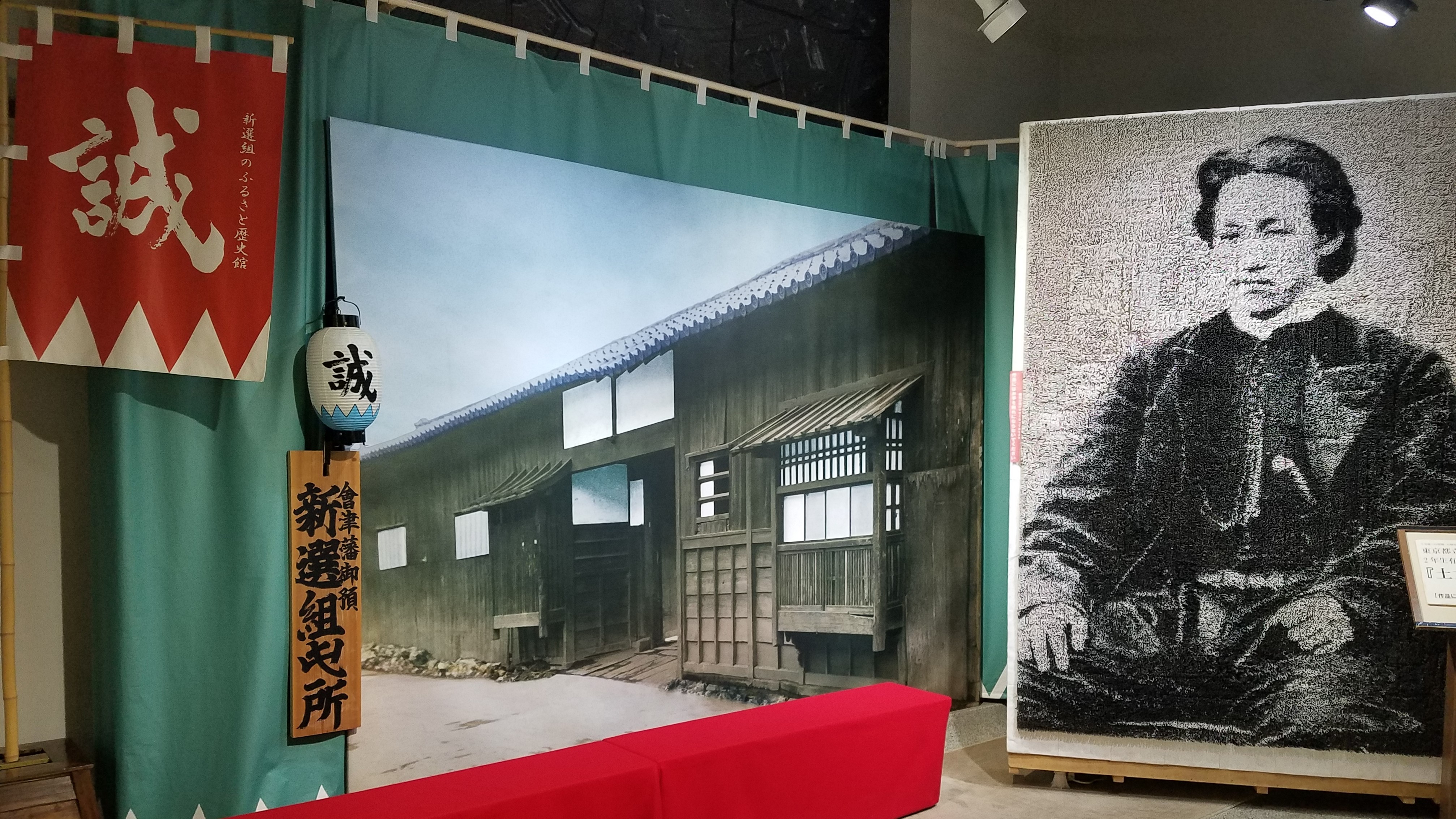
Being a Kyoto Shugoshoku during turbulent times was definitely unpleasant and demanding to Matsudaira Katamori. Several daimyo domains displayed an aggressive move of expelling foreigners regardless of their identity and occupation. The whole of Kyoto was flooded with waves of radical views, with the toppling the bakufu being the mainstream vision during the shogunate’s final years. To combat the rising opposition proponents, Matsudaira Katamori established the Shinsengumi (formerly known as the Mibu Rōshigumi) in 1863. In their short six-year history, the Shinsengumi played a significant role in safeguarding the shogunate and disrupting the planning of several catastrophic events from the Chōshū and Satsuma. The Tokugawa shogunate was eventually overthrown in 1868 and Japan entered a new modernization era, known as the Meiji Restoration. Upon its major defeat in the Toba-Fushimi battle, the Shinsengumi withdrew from Kyoto and continued the fierce fight in Edo. The remaining troops retreated to Aizu and Hakodate marking the end of the Shinsengumi in 1869.


Konkai-kōmyōji
Founded in 1175, Konkai-kōmyōji is one of the Jōdo Buddhism sect’s eight head temples. The Temple, with a castle gate built to the west, was located on a small hill serving as a natural fortress. It was spacious enough to accommodate a thousand troops and more importantly, it was in the Imperial Palace’s vicinity just around 2km away. In view of this, the Temple served as the Kyoto Shugoshoku Honjin where Mibu Rōshigumi was established upon Matsudaira Katamori’s instruction. Kondō Isami was deeply appreciated for the Aizu-han’s support and promised to serve the bakufu for life and not giving up at any attempts. Subsequently, Konkai-kōmyōji became a meeting venue between Matsudaira Katamori and Kondō Isami, or any other Shinsengumi representatives.
Address: 121, Kurodani-cho, Sakyo-ku, Kyoto
Getting there: 5-minute walk from the Okazaki Michi Bus Stop on bus number 100 from the Kyoto Station

 English
  Chinese