
The Shinsengumi is written as新選組 (Chinese phonetic alphabet as xin xuan zu) in Kanji, an ideogram that is used in the Japanese writing system along with the Hiragana and Katakana phonetic symbols. In some publication and site monuments however, it is often seen as新撰組 (Chinese phonetic alphabet as xin zhuan zu) as well, creating a considerable level of confusion among readers and leading to guesses on various translation or adaptation from different writers or even from Chinese communities. In fact the latter’s writing also originated from the late Tokugawa period historical records. The two characters appear to be interchangeable given its homophone in Japanese.


From the start of mid-Meiji period, there was a relaxation on the restriction measures regarding the open and fair assessment of events or protagonists for the shogunate, following a rising number of publications on the Shinsengumi. There was no standard characters choice though. Among the most representative ones, The Trilogy of the Shinsengumi by Kan Shimozawa, Shinsengumi Keppūroku by Ryōtarō Shiba, Tokugawa Yoshinobu by Yamaoka Sōhachi opted for the 選 character, while the literatures from the notable Japanese writers Akira Yoshimura and Eiji Yoshikawa adopted the 撰 character. In 1998, a Japanese publisher printed a paperback based on the Nagakura Shinpachi’s memoirs which was originally published on the Otaru Shinbun newspaper in 1911. It was the phonetic zhuan alphabet which the book used. In view of Nagakura Shinpachi’s authority as the Shinsengumi second unit’s captain, ever since the book’s publication, it has led to a popular use and higher recognition of the 新撰組 writing. However, with reference of the historical record at the Shinsengumi’s time, would there be any documentation providing a more justifiable stand on Kanji’s correct use? I’m afraid not. In Shimada Kai’s diary, it was mentioned that the Aizu-han, in Kyoto Shugoshoku’s capacity, promoted the Mibu Rōshigumi to the Imperial government and the Shinsengumi’s name was granted by Imperial order. In his record, it was clearly written as 新選組, but the Aizu-han document somehow stated otherwise.
The Shinsengumi, with its name literally referred to as newly selected corps, was in high correlation with the 新選組Kanji, of which a new cadet was trained by a group of rōnin from all walks of life, being selected to remain with the same intention of protecting the shōgun and restoring law and order in Kyoto. However the撰 character, in Chinese context, has a meaning of talent and support compilation which seems to better cater towards recruiting rōnin of brilliant swordsmanship skills. In fact historians and scholars, based on the Emperor’s naming as recorded in the Aizu-han document, once echoed 新撰組 as being the original writing. It however eventually led to different character writings based on the fact that the rōnin of the time tended to rely on verbal communication as they were generally relatively less literate. Given the two characters’ homophonetic nature, it was assumed they were mistakenly written, including the Kondō Isami’s documents.

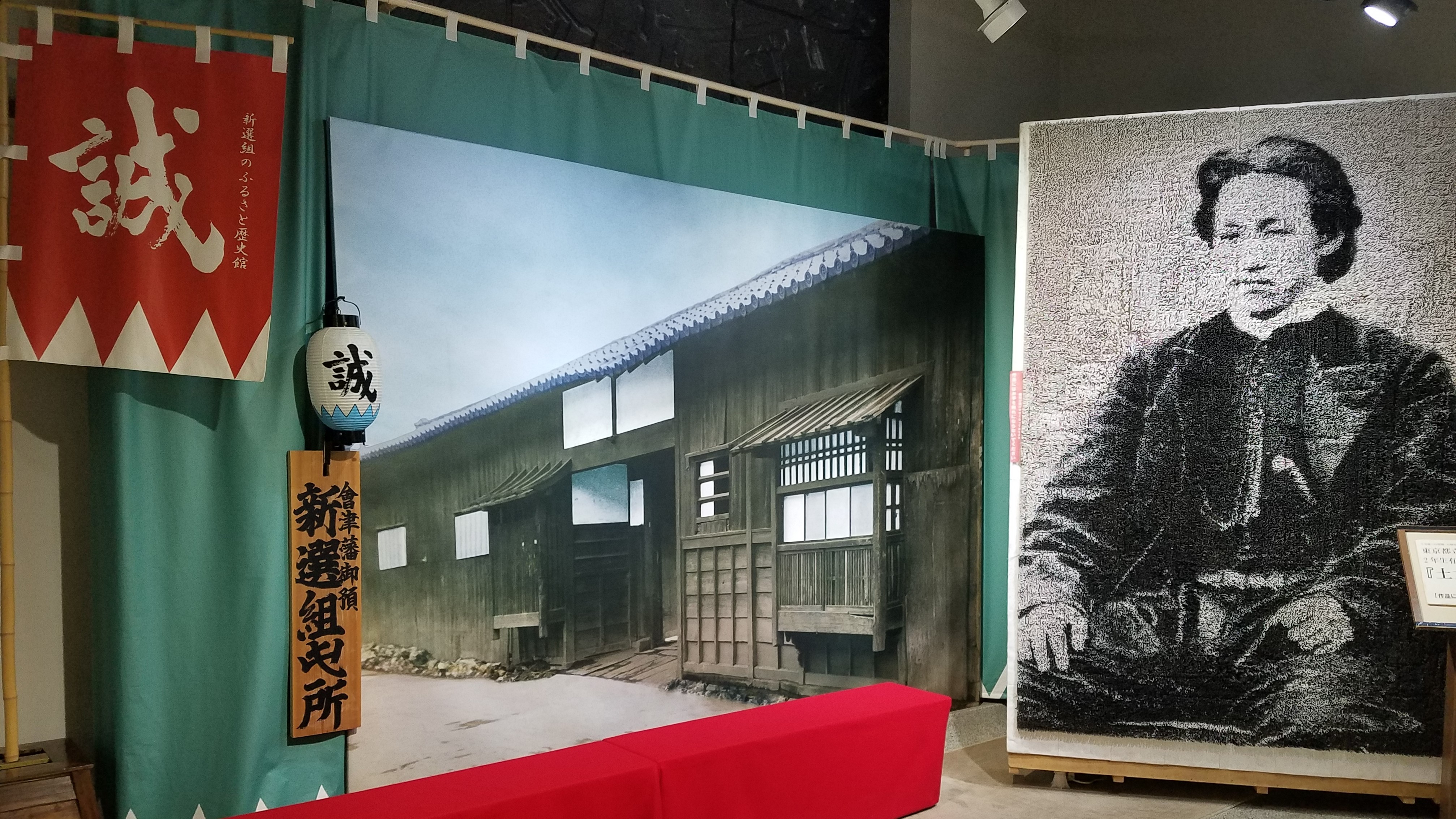
The underlying assumption for the specific use of the 新選組 writing is nowhere to be verified. Nevertheless artifacts have highlighted its use by the Shinsengumi members. In addition to Kondō Isami’s letters to his hometown Tama written with this character, there was a similarly engraved seal for letter’s signatory’s stamping use. The seal is now readily exhibited at the Kojima Museum in Machida (Tokyo). Based on the Shinsengumi ibun book by Kan Shimozawa, with background information supplemented during the Edo period’s interview by Yagi Tamesaburo, son of Yagi Gennojo, he reflected that the right pillar’s doorplate at the Yagi Residence’s entrance bared this character writing as well.

Nowadays, the Japanese Government has standardized the use of the 新選組 character as Shinsengumi’s official name in Kanji including but not limited to the historical site’s signage and description, event promotion such as Tokyo’s Hino-shi Shinsengumi Festival and the documentation of personnel and artifacts. However the two characters’ discrepancy study has allowed a deeper understanding of the troop in its history and culture which they encountered, and its history’s mystery is always what the fancy lies.


 English
  Chinese